Vote Against the Constitutional Amendments Print Resource
AMENDMENTS BACKGROUND
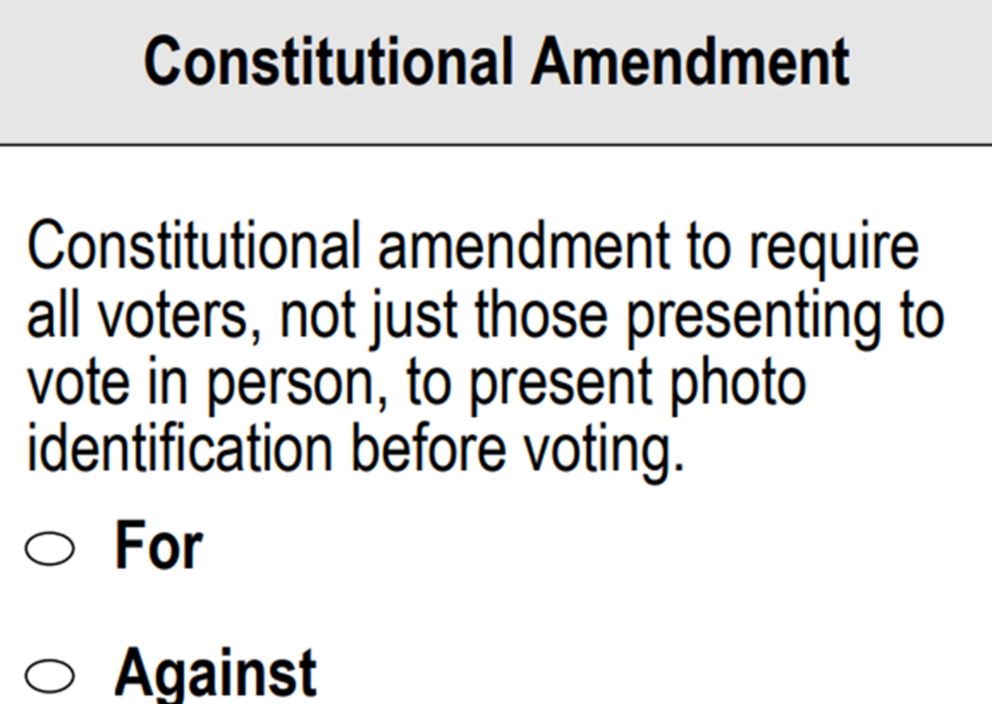
“Require Photo ID for all voters” (Senate Bill 921 – 2024) enshrines the voter ID law into the state constitution, requiring all voters to present valid photo identification before voting, regardless of how they cast their ballot.
- CURRENTLY: Under current law, voters must show photo ID when voting IN PERSON during early voting or on Election Day. If a voter forgets to bring an acceptable photo ID, they can vote a provisional ballot, and take an acceptable ID to a county elections board by noon on the third business day after the election. If a voter doesn’t have an acceptable ID (whether voting in person or by mail), they can request and fill out an ID Exception Form and vote a provisional ballot or return to their county board of elections with a photo ID at a later date. Mail-in ABSENTEE voters must include in their ballot return envelope either (1) a photocopy of their photo ID or (2) an ID exception form saying they are unable to attach a copy of photo ID.
- UNDER THE AMENDMENT: “[ ] FOR [ ] AGAINST Constitutional amendment to require all voters, not just those presenting to vote in person, to present photo identification before voting.”
- WHY WE’RE AGAINST IT: Voter ID is already law. Instead of making voting easier, lawmakers are asking voters to permanently put a voter ID requirement into our state Constitution, meaning the requirement could not be changed by state legislation – only by another constitutional amendment. This move doubles down on the harm felt by communities most affected by the voter ID law, including Black and brown communities, students, and rural and older voters. North Carolinians deserve elections that are secure, accessible, and fair, without unnecessary barriers that can make it harder for eligible voters to vote.
“Lower Taxes for All NC” (Senate Bill 1080) would limit the state income tax rate to 3.5% both for personal and corporate income taxes
- CURRENTLY: This would be a significant decrease from 7%, which was the maximum rate approved by voters in 2018. Significantly, the 7% tax cap amendment was placed on the ballot by an illegally gerrymandered legislature and its legitimacy is the subject of ongoing litigation.
- UNDER THE AMENDMENT: “[ ] FOR [ ] AGAINST Constitutional amendment to keep the State income tax rate from being raised higher than three and one-half percent (3.5%).”
- WHY WE’RE AGAINST IT: A lower income tax cap won’t make life more affordable. It WILL lock in tax cuts for corporations, shifting costs to families. For years, NC lawmakers have given huge income tax cuts to wealthy households and corporations while communities struggled with teacher shortages, unaffordable child care and housing, rural hospital closures, and other unmet needs. The amendment would make it even harder to get the wealthy to pay what they truly owe in taxes so we can all pool our resources to invest in our communities.
“Const. Amend. Property Tax Levy Limit” (House Bill 1089) would create a property tax “levy limit,” keeping North Carolina counties from raising revenue when there are funding shortfalls (e.g. when there is no state budget).
- UNDER THE AMENDMENT: “[ ] FOR [ ] AGAINST Constitutional amendment requiring limits on property tax increases by local governments.”
- WHY WE’RE AGAINST IT: A property tax limit means tax breaks for luxury apartments, data centers, and corporate landlords, service cuts, and little relief for struggling residents. Property taxes help pay for schools, firefighters, libraries, parks, elections, water and sewer systems, and much more. The amendment would require the state legislature to limit local elected officials’ ability to set property tax rates based on community needs. It does not mean that your property tax bill will go down: Analysis of one potential 2% limit found the average homeowner would save about $7 a month, while North Carolina local governments could lose at least $950 million for community services. Meanwhile, the biggest property owners could receive much larger tax breaks.
“Voter ID is part of a long history of race-based voter suppression in North Carolina with a direct negative impact on those in Black and brown communities. This is an active deterrent to voting, it silences the voices of future voters, and it makes it even more difficult to remove or make changes to existing photo ID law.” –Adrienne Kelly, Executive Director