No matter your issue or what you care about, you will find it on your ballot in 2026
Feel free to print the resource below and hand them out to your friends & family!
Feel free to print the resource below and hand them out to your friends & family!
PRIMARY ELECTION DAY: March 3, 2026
SAVE TIME, VOTE EARLY: February 12-28, 2026
GENERAL ELECTION DAY: November 3, 2026
SAVE TIME, VOTE EARLY: October 15-October 31, 2026
REMEMBER: Start local
LOCAL JUDGES and CLERKS + DISTRICT ATTORNEYS
Have the power to do everything from felony and misdemeanor criminal cases to business disputes to divorce and child custody.
LOCAL SHERIFFS
Oversee general law enforcement for their entire county. They make arrests and investigate crime.
LOCAL COUNTY COMMISSIONERS
Hold the purse strings for your community, determining everything from local funding for your elections and schools to setting property taxes.
LOCAL BOARDS OF EDUCATION
School boards decide where kids go to school, classroom sizes, and even what textbooks are used.
LOCAL MAYORS and CITY COUNCILS
A number of NC municipalities have elections in 2026 for mayors and city councils, all of which directly impact your community.
LOCAL SOIL AND WATER CONSERVATION SUPERVISORS
Establish conservation priorities and work on soil preservation, flood prevention, and protecting clean water.
REMEMBER: Choose Who Runs Our State
All North Carolinians will be affected by these branches of government.
STATE JUDGES AND JUSTICES: NC COURT OF APPEALS + SUPREME COURT
The state’s highest courts hold the governor and legislature accountable, make life or death decisions in death penalty appeals, and are the final word on other appeals and interpretations of state laws, from voting maps to whether you have to show your ID when you vote.
STATE LEGISLATURE: NC SENATE + NC HOUSE
The two chambers of the NC General Assembly hold the power to make state laws on everything from voting maps to investment in education. The NC Senate is made up of 50 members, and the NC House is made up of 120. They are elected for 2-year terms.
REMEMBER: Don’t Forget Your Federal Picks
Everything from the future of the economy to immigration to public health is on your ballot.
CONGRESS: U.S. SENATE + U.S. HOUSE OF REPRESENTATIVES
With the ability to make U.S. law and oversee federal agencies, Congress’ powers include investing tax dollars, military intervention, and when to hold the President accountable.
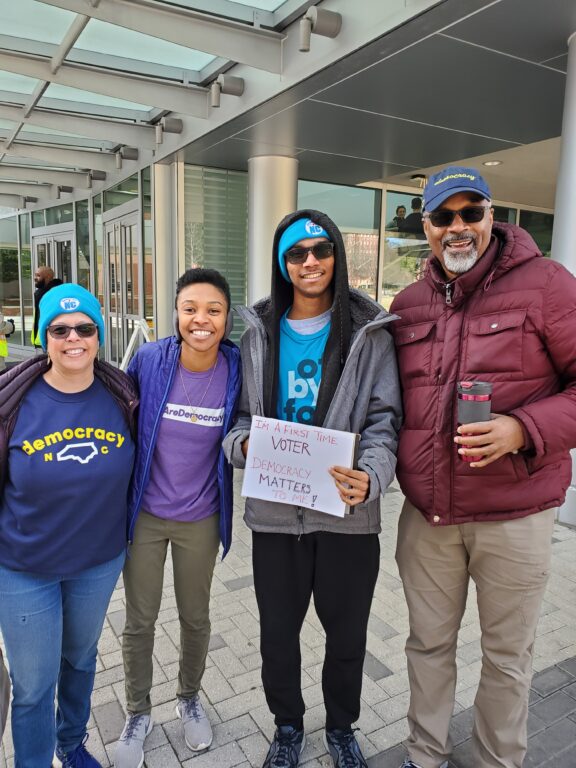
Over 5.5 million North Carolinians cast a ballot during the 2020 General Election – nearly 72% of the state’s voting population, and the highest turnout in history. Let’s keep up that momentum and get all of our friends and family to vote with us!